Eleven Years in Transit: The Letter That Came Back to Meet Me
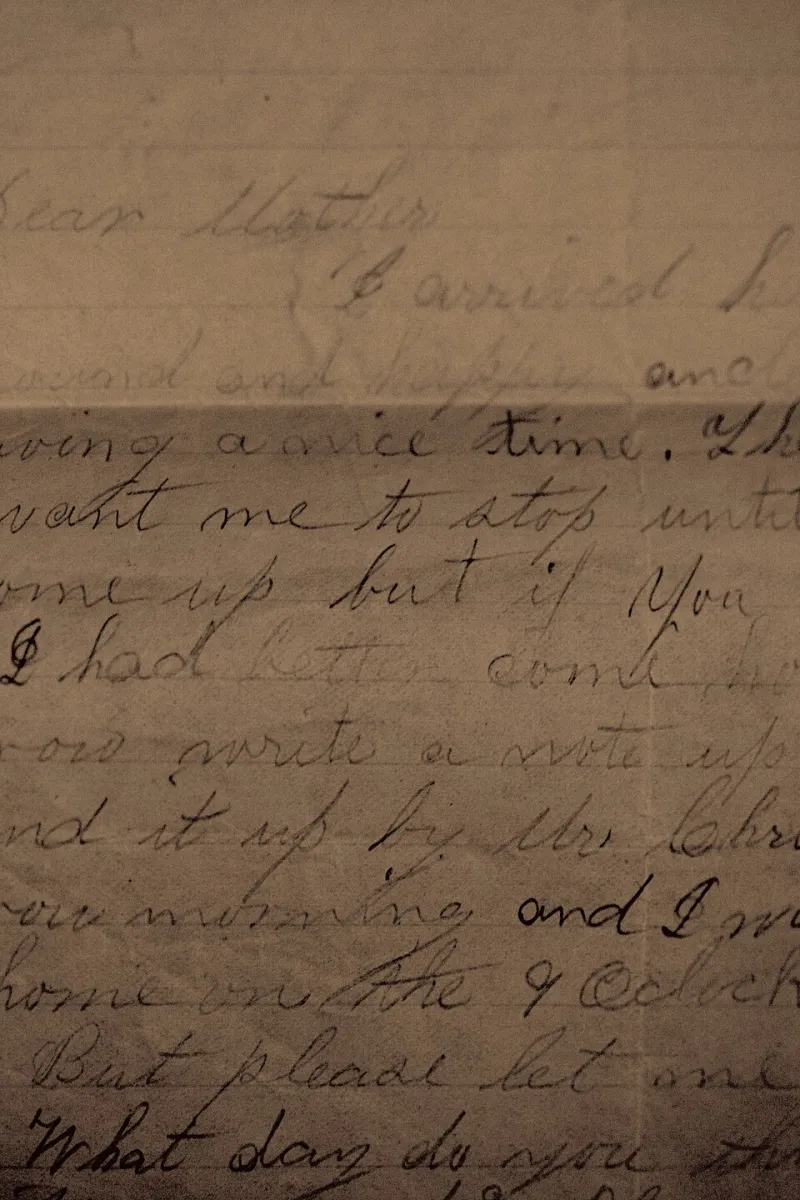
Photo: Pink Sherbet Photography from USA, CC BY 2.0, via Wikimedia Commons
The envelope showed up on a Tuesday, wedged between a electric bill and a coupon for a local Thai place I've never tried. I almost recycled it without opening it. The return address was mine — but not quite. It listed an apartment in Chicago I hadn't lived in since 2015, in a building I still occasionally dream about, the one with the radiator that clanked like it was trying to escape.
Then I saw the postmark. 2014.
Eleven years. My letter had spent more time in the postal system than some of my friendships have lasted. It had outlived three phones, two jobs, one global pandemic, and every version of myself that didn't know she was temporary.
What I Wrote to Someone I Can't Identify
Here's the thing about a letter you mailed a decade ago: you forget who it was for.
I sat on my kitchen floor and read my own handwriting like it was a ransom note from a past life. The letter was warm, chatty, full of the specific confidence of a twenty-six-year-old who believed she was three good months away from figuring everything out. I mentioned a novel I was "almost done with." I referenced a friend by first name only. I apologized for the late reply.
The late reply, it turns out, was mine to the universe — eleven years late.
I never found the intended recipient. I asked around, scrolled through old contacts, even posted about it (half-jokingly) hoping someone would claim it. Nobody did. So the letter became something stranger than correspondence: a message with no addressee, which meant it could only have been meant for me.
Meeting the Woman Who Thought She Was Almost Done
There's a particular ache in reading your younger self's optimism. Not embarrassment — I've made peace with most of my old cringe. It's more like watching someone pack for a trip you know gets rerouted.
She was so sure about the novel. (The novel is still in a drawer. That's a different essay.) She was nervous about a job interview I no longer remember having. She signed off with "more soon," which, given postal conditions, turned out to be darkly prophetic.
But here's what surprised me: I liked her. Genuinely. She was generous in a way I'd forgotten I knew how to be — she asked four separate questions about the recipient's life and answered none about her own. She noticed small things. She thought a coffee shop opening in Wicker Park was news worth sharing.
We tend to treat our past selves like rough drafts. That letter read more like a first edition.
The Case for Slow Mail in a Fast Life
I've thought a lot about why this hit me harder than finding an old email would have. An email from 2014 would be data. This was an object. It had traveled. It carried a coffee ring from some unknown counter, a soft crease where something heavy had rested on it for what I can only assume was the better part of a decade.
Email has no geography. A letter is proof that a physical thing can hold a feeling in suspension. Somewhere in a postal facility — maybe a bin behind sorting equipment in Atlanta, maybe wedged into a wall of a decommissioned office — my words sat in amber while my entire life happened around them.
There's a version of this where I'm angry at the USPS. I'm not. I'm weirdly grateful. Some messages shouldn't arrive on time. Some need to marinate until the person receiving them is capable of understanding them. Eleven years ago, I would have skimmed that letter, thought "huh, that was a nice thing I wrote," and moved on. Last spring, I read it twice and cried a little and started writing to people by hand again.
More Soon
I've started leaving my letters deliberately unfinished. Not dangling projects — actual correspondence, notes I write and don't send, stamped and addressed and sitting in a drawer. My own delayed-delivery program, in case future me needs evidence.
Because here's what the postal system taught me, in its slow, bureaucratic, oddly poetic way: you never know which version of yourself is going to need to hear what you have to say. Write it anyway. Put it in the mail.
Worst case, it takes eleven years. Best case, that's exactly how long it needed.