The Note Tucked Inside Chapter Nine: How a Stranger's Margin Scribbles Rebuilt My Faith in Bookstores

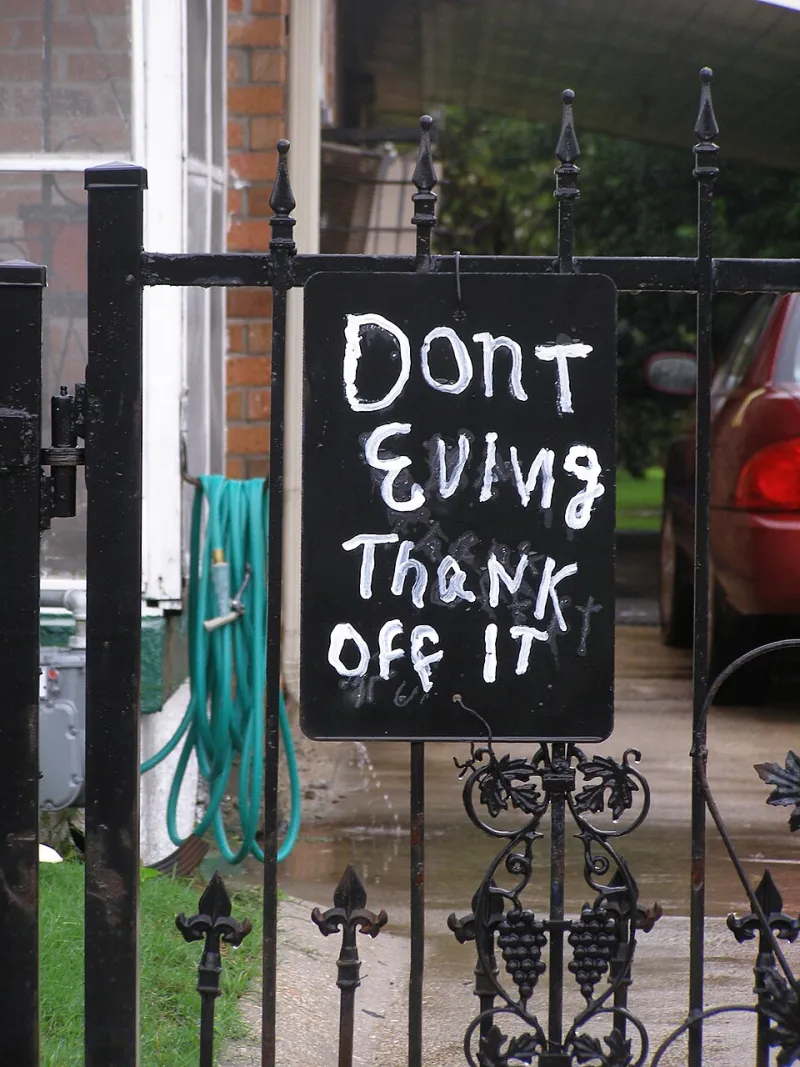
Photo: Caitlin Huxley, Public domain, via Wikimedia Commons
The shelf is easy to miss if you don't know what you're looking for. It's at the back of Wren & Paper, the independent bookstore two blocks from my apartment in Portland, wedged between the staff picks and a wobbly card table of discounted cookbooks. Hand-lettered sign, slightly askew: "Leave a book. Take a book. Notes welcome. Judgment not."
I walked past it for a year before I stopped.
The Shelf That Runs on Trust
Here's how it works, as far as I can tell, because nobody official runs it. You bring a book you couldn't finish — or one you finished and can't stop thinking about — and you leave it. If you're feeling brave, you tuck in a note. A few lines about where you were in life when you read it. What you were running from or toward. Whether you cried.
The notes are the whole thing.
The first one I found was inside a battered copy of Stoner by John Williams. A torn piece of notebook paper, folded in thirds: *"My dad read this twice before he died. I never saw him read anything, ever. I think he was telling me something and I wasn't ready to hear it. Maybe you are. — M."
I stood in that aisle for a long time, holding a dead man's book recommendation filtered through his grieving kid, and I did not put that book down until I'd read the whole first chapter standing up.
Algorithms Know My Clicks. Strangers Know My Guts.
I want to be careful here, because I'm not anti-algorithm. My reading app has introduced me to authors I love, and it does so with unnerving accuracy. But that's exactly the problem. It knows I devoured three books about lighthouse keepers in one winter, so it feeds me more lighthouse keepers, more winter, more of the person I already was on the day I clicked.
The stranger's shelf doesn't know anything about me. That's its superpower.
When "M." left that note, they weren't optimizing for my taste profile. They were just... handing something over. Raw, un-targeted, addressed to no one and therefore to anyone. There's a wordlessness to it that no recommendation engine can replicate, because the engine's entire job is to narrow things down, and the shelf's entire job is to leave things open.
Chapter Nine, and the Woman Who Wrote Me Back
After a few months of lurking, I left my first book. A Little Life, which I'd abandoned around page 400 because it was wrecking me in ways I couldn't afford that spring. My note said: *"Stopped here. Not because it's bad — because it's too good and I wasn't strong enough. If you finish it, you're braver than me. — A stranger who cried in a laundromat over chapter 9."
Six weeks later, I found a reply. Tucked into a different book, but addressed to me: *"Dear laundromat crier. I finished it. You were right to stop. Come back to chapter 9 whenever you need to feel something. The book will wait. So will I. — Your stranger."
We've corresponded maybe five times now, through notes left in books, never signing more than fragments. She works nights. I figured that out because her handwriting gets more slanted in the later notes. She told me she reads on her breaks in a hospital parking garage. I told her about the winter I almost quit writing entirely. Neither of us has suggested coffee. It would ruin the beautiful impossibility of it.
What the Shelf Is Actually Selling (Which Is Nothing)
A bookstore owner I know once told me that the most valuable real estate in any shop isn't the bestseller table — it's wherever a customer might accidentally encounter a book they weren't looking for. The stranger's shelf is that idea taken to its logical extreme. It's curated randomness. Curation without a curator.
And the intimacy is structural. When a friend recommends a book, there's a relationship to manage — will they ask if you liked it? Will your honest "not for me" bruise something? When an algorithm recommends one, there's nothing to manage at all. But a stranger's note exists in the exact middle: no relationship to maintain, total sincerity required. You can be brutally honest with a stranger in a way you can't with anyone who knows your face.
Go Leave Something
If your town has an indie bookstore — and I hope it does, because I need you to buy local so these places keep existing — check the back corners. Some of them have shelves like this. And if yours doesn't, start one. All it takes is one book, one note, and the willingness to be a little unguarded in public.
Write like nobody's profiling you. Because nobody is. That's the whole gift.
I still don't know who M. is. I still don't know my parking-garge correspondent's name. But I've cried at their sentences, laughed at their asides, and rearranged my reading life on their wordless advice. No feed has ever done that for me. No app has ever left me a note that started with *"dear laundromat crier."
The shelf knows what I'm going through, somehow. Or maybe it just makes room for whatever I bring to it. Either way, I keep going back.