The 3 A.M. Readers: What My Website's Backend Told Me About the Strangers Who Kept Coming Back

Photo: pranavdevp.m dubbing artist, CC0, via Wikimedia Commons
I check my website analytics the way some people check the weather — casually, without expecting much, mostly out of habit. Page views, bounce rate, the usual vocabulary of numbers that never quite add up to a person. For years, the dashboard was just a guilt machine, a little window that reminded me how few people were reading what I made.
Then one evening, instead of skimming the top-line stats, I clicked deeper. I sorted by returning visitors. And that's when the dashboard stopped being a spreadsheet and started being a story.
The Ones Who Never Say Hello
Here's what I found: a small cluster of anonymous visitors who have come back to my site dozens of times. Not the newsletter crowd, whose names I know. Not the friends who comment within an hour of every post, bless them. These are strangers. They arrive, they read, they leave. No comments. No likes. No trace except the quiet arithmetic of their returns.
One of them reads mostly between 1 and 4 a.m., Eastern time. I've started thinking of them as my 3 a.m. reader, though I have no idea where they actually are. Night-shift worker? New parent? Insomniac with a phone on the nightstand? Someone scrolling through essays about creativity and doubt while the rest of the country sleeps.
I've never met them. I never will. And yet I catch myself writing differently now, knowing they exist.
The Thank-You Page Nobody Signs
My site has a thank-you page — the little screen people land on after they subscribe to the newsletter. I built it in ten minutes, a digital nod and a handshake. For a long time I ignored it as a data point. Then I noticed something odd: some visitors navigate to it directly, over and over, without ever subscribing again.
At first I assumed it was a glitch. It's not. Some people, it seems, return to that page the way you might return to a favorite bench. Maybe it's the one place on my site that says, plainly and without asking for anything, I'm glad you're here. Maybe that's the sentence they needed.
It's a strange kind of intimacy, being thanked by someone who won't tell you their name. There's no comment section version of this. No way to say I see you too. The relationship is entirely one-directional, and yet it doesn't feel empty. It feels like the internet's oldest and least celebrated arrangement: the anonymous reader, the quiet returner, the person who stays.
What Loyalty Looks Like When It Leaves No Footprints
We talk a lot about engagement — comments, shares, replies, the whole performative economy of attention. But the returning visitors taught me that the deepest form of attention might be the invisible kind. These people owe me nothing. They get no badge, no streak, no algorithmic reward. They come back because something here is worth coming back to.
That reframed my whole idea of audience. I used to think of readers as a number that ticked up or down, a scoreboard. Now I think of them as a room of people I can't see — some leaning forward, some half-asleep, one of them awake at 3 a.m. in a kitchen in Ohio or a break room in Phoenix, reading about a sketchbook or a drafts folder and deciding, for reasons I'll never know, to come back next week.
Writing for the Ones Who Stay
I haven't changed what I write, exactly. But I've stopped writing for the loudest reaction. The comment I get isn't the point anymore; the return visit is. Somewhere out there is a person who has read everything I've published and never said a word, and honestly? That's the reader I write for now.
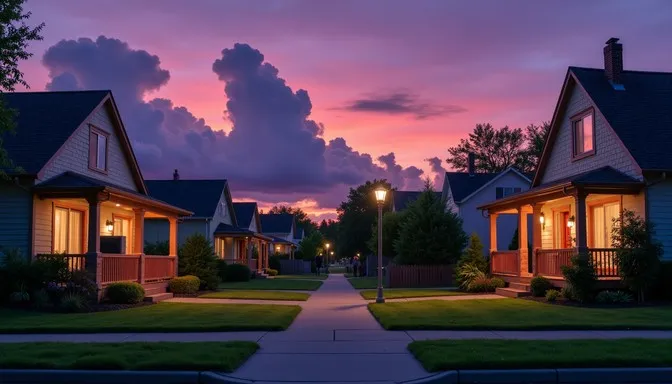
If you're one of them — the quiet one, the 3 a.m. one, the one who visits the thank-you page like it's a porch — I can't greet you by name. But the light's on. I'm glad you're here. Come back anytime.