Three Copies, Two Friends, One Very Expensive Lesson in Joy
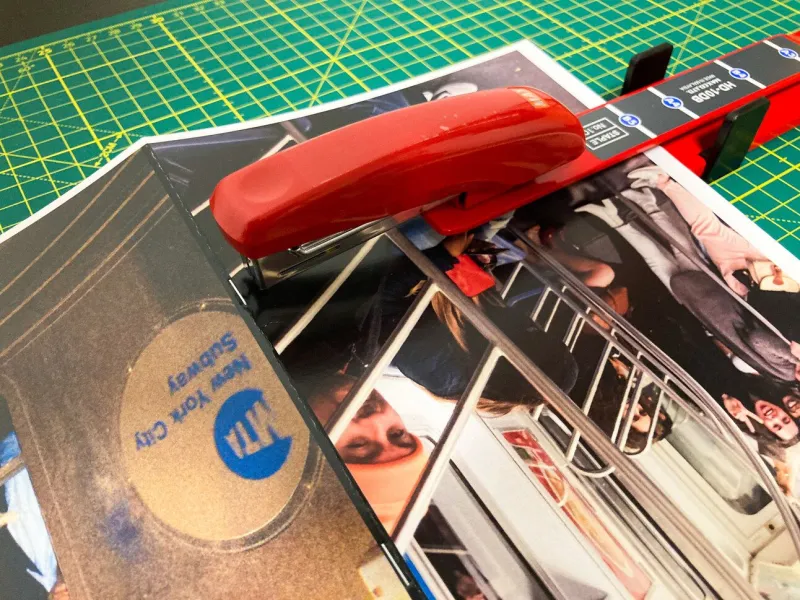
Photo: handmade zine spread on wooden table with stapler, via media.beehiiv.com
Last fall I made a zine. Forty copies, saddle-stitched, printed at a shop in Queens that smelled like toner and old gum. It was a little photo essay about laundromats — the glowing windows, the lonely socks, the strangers folding in parallel silence. I loved it the way you love a thing you made with your whole chest and no market research.
It sold three copies. Two to friends (hi, Priya, hi Marcus, I saw those Venmo requests). One to a stranger, which I will discuss later because that copy deserves its own paragraph.
Forty printed, three sold. And yet I keep telling people it was the most useful thing I did all year. Here's the receipts.
1. Finishing Is a Skill, and I Hadn't Practiced It
I have a drafts folder full of almosts — essays at 80%, paintings at the ugly stage. The zine was the first project in years I took from "idea" to "object you can hold." Turns out that last 20% — the printing, the trimming, the stapling, the part where you stop fiddling — is its own muscle. Now every other project feels less like a summit and more like a hill I've climbed before.
2. Pricing Your Work Is a Gut Check, Not a Math Problem
I agonized over the price. $8? $12? What if it was too much? What if it was insulting? I finally settled on $10, mostly because I saw a zine about pigeons for $10 and decided the pigeon people knew something I didn't. The lesson wasn't the number. It was that pricing forces you to say "this has value" out loud, and that sentence gets easier every time you say it.
3. Nobody Buys Things They Don't Know Exist
I told myself I'd "let the work speak for itself." The work, it turns out, cannot speak. It has no mouth. I posted once on Instagram and then retreated into artistic dignity, and the zine sat in a shoebox like a very well-designed secret. Marketing isn't begging. It's just telling people, more than once, that a thing exists. I know this now. I knew it intellectually before. Now I know it in my bones.
4. Constraints Are Cheaper Than Therapy
Eight pages. One color. Black ink on cream paper. Every constraint I set saved money, sure, but it also saved me from myself. The zine was good because I couldn't do everything. Every project since, I've started by choosing what I'm not allowed to do, and the work gets sharper immediately.
5. The Third Copy Changed My Whole Chemistry
A woman bought a copy at the small press fair in Brooklyn. I don't know her name. She flipped through it, laughed at one specific photo of a laundromat cat, paid, and left. That's it. That's the whole story. And I have thought about her roughly nine hundred times since. Because she wasn't buying me — no friendship, no obligation, no history since middle school. She just saw a thing and wanted it. One stranger can outweigh thirty polite friends, mathematically and spiritually.
6. The Shoebox Problem Is Real and Solvable
Thirty-seven unsold copies is a lot of unsold copies. For about a month they reproached me from the closet. Then I gave some away, mailed a few to people who'd never expect it, and left a stack at my favorite coffee shop with a "take one" sign. The zine finally started doing what zines do: existing in the world, being passed around, outliving its commerce. A thing's life doesn't end at the cash register.
7. Pointless Is a Point of View
Here's the big one. The zine made no money, built no audience, advanced no career. By any metric that matters to LinkedIn, it was a failure. But I am inexplicably proud of it. I made a small, strange, complete thing, and for a few weeks I was a person with a zine. That identity was worth the printing bill on its own.
If you're sitting on an unpurchased project — the chapbook, the EP, the calendar of your dog's facial expressions — consider this your permission slip. Make the small run. Sell three copies. Learn everything.
The laundromat zine didn't find an audience. It found me a version of myself I hadn't met yet. Cheap at any price.