A Shaky Hand Is Not a Defect: Making Art in the Age of Instant Everything
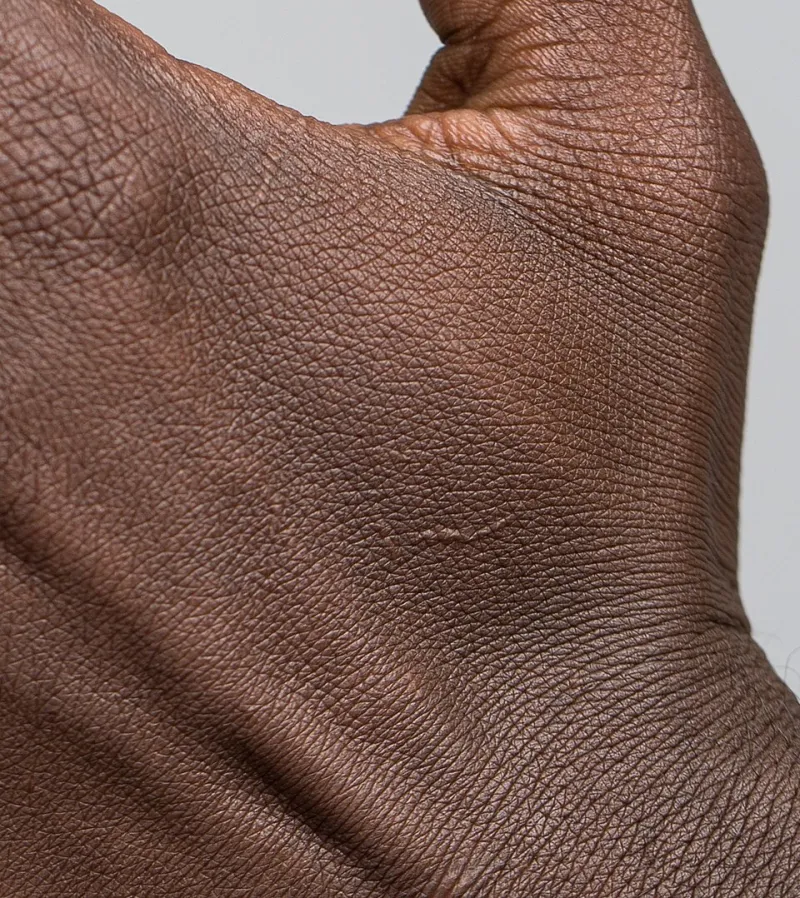
Photo: Genusfotografen (Tomas Gunnarsson) / Wikimedia, CC BY-SA 4.0, via Wikimedia Commons
Last week I watched a friend type six words into an image generator and get back a perfect little watercolor of a kitchen table. It took maybe eleven seconds. Then she picked up a pencil and tried to draw the same table by hand. The legs were crooked. The salt shaker looked like a small worried man. She sighed and said, see, this is why I do not draw.
I wanted to frame the crooked table.
We are living through a strange moment in creative work. In 2026, polish is cheap. A flawless image, a flawless paragraph, a flawless portfolio grid can be summoned before your coffee cools. And yet the things I keep returning to, in my own work and in other people's, are the things that carry evidence of a hand. The shaky line. The erased-and-redrawn edge. The color that does not quite belong. The decision you can see someone making.
The Tyranny of the Flawless Rectangle
I have nothing against a clean rectangle. I have made many clean rectangles. There is a real pleasure in a grid that lines up, a sentence that lands, a portfolio page that looks like it has its life together. But when every rectangle can be flawless, flawlessness stops being a signal. It becomes the default. It becomes wallpaper.
The other day I opened a stock library and felt the small death of looking at forty near-identical images of people laughing at salads. Nobody was wrong. Everybody was polished. I closed the tab and went back to a drawing I had abandoned because the left arm was too short. Suddenly the too-short arm felt like a personality.
That is the shift I keep noticing. The things that used to read as mistakes are starting to read as signatures. Not because mistakes are automatically good, but because they are specific. A machine can give you a beautiful hand. It cannot give you your hand, with the weird callus on the middle finger and the habit of pressing too hard on the downstroke.
What the Tremor Knows
I am not a neat artist. My lines wobble. My letters lean. If I try to draw a circle, it comes out as a circle that has recently received bad news. For years I treated this as something to fix, or at least disguise. I bought better pens. I watched tutorials. I practiced drawing straight lines until I was bored and slightly angry.
Then a friend who teaches illustration said something I have not shaken. She said the wobble is where the person is. It is the record of a body in a room, holding a tool, making a choice. A perfectly straight line is a fact. A wobbling line is a story about the person who made it.
I think she was being generous, but I also think she was right. When I look at work I love, I am not usually looking for proof that the maker never made a mistake. I am looking for proof that the maker was there. The hand is a strange little instrument. It gets tired. It hesitates. It has opinions. All of that leaks into the line.
The Audience Is Hungrier Than We Think
Here is the part that surprises me. I expected audiences in 2026 to be fully seduced by polish. And many are, at least for a scroll or two. But I keep hearing the same small confession from people who consume creative work for a living: they are tired of perfection. They want to know that a person made the thing. They want the tell.
A photographer friend told me she has started leaving a little dust in her frames. A designer told me he keeps one hand-lettered word in every identity system because clients respond to it more than the logo. A writer told me her newsletter grows fastest when she includes the paragraph she almost deleted, the one where she admits she has no idea what she is doing.
This is not a call to be sloppy. It is a call to be legible. There is a difference between a rough edge that says I ran out of time and a rough edge that says I made a choice. The first is just unfinished. The second is alive.
A Small Practice of Visible Decisions
Lately I have been trying to leave more decisions visible in my own work. Not every decision. I am not going to hand a client a drawing with my coffee ring on it and call it brave. But I am trying to stop sanding off the parts that feel like me. If a line wobbles, I leave it. If a color is a little off, I ask whether the offness is doing something. Sometimes it is. Sometimes it is just wrong, and I fix it.
The rule I have landed on is simple: keep the evidence, not the mess. Evidence says a person was here. Mess says nobody finished. The goal is not to make everything look handmade. The goal is to make the handmade parts mean something.
What I Am Keeping This Year
So here is what I am keeping in 2026. I am keeping the sketch where the proportions are wrong but the feeling is right. I am keeping the draft with the sentence that sounds like me talking to myself. I am keeping the crooked table.
I am not anti-tool. I use the tools. They are useful and strange and occasionally wonderful. But I do not want to mistake smoothness for soul. I do not want to spend my one wild creative life trying to look like a machine that has never had a bad day.
The wobble is not a bug. It is the point. It is the small human signature on a page that could have been perfect and chose to be specific instead.